Hypochondriasis
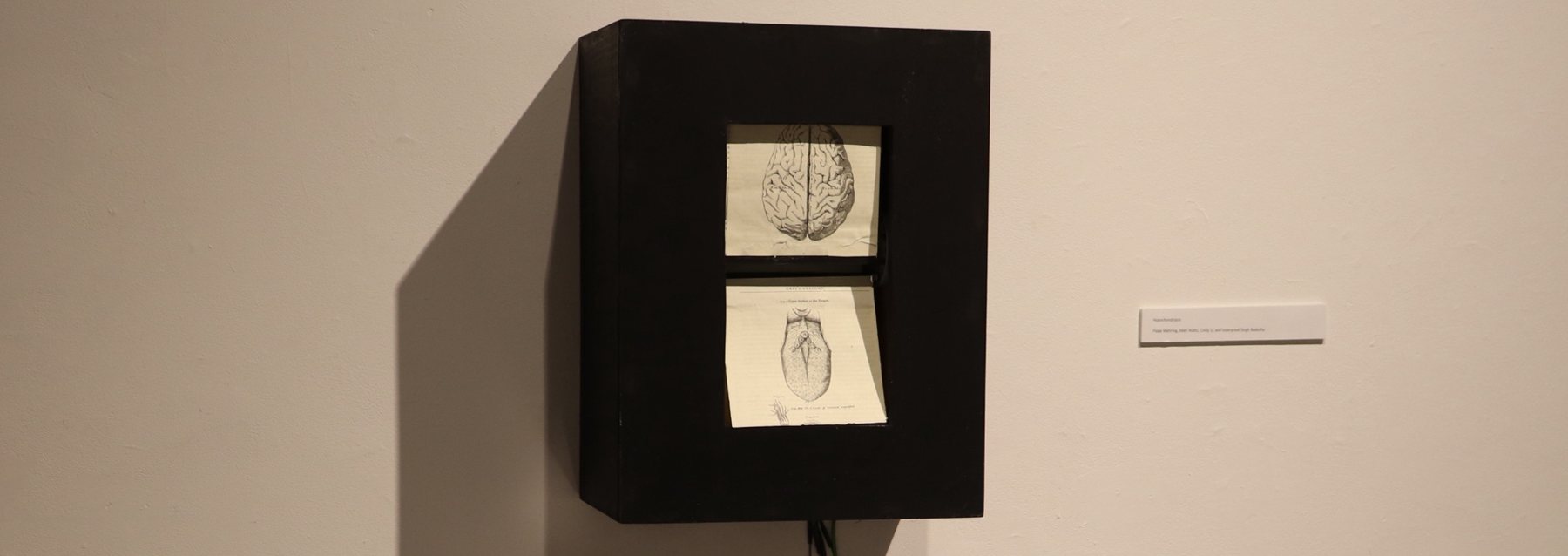
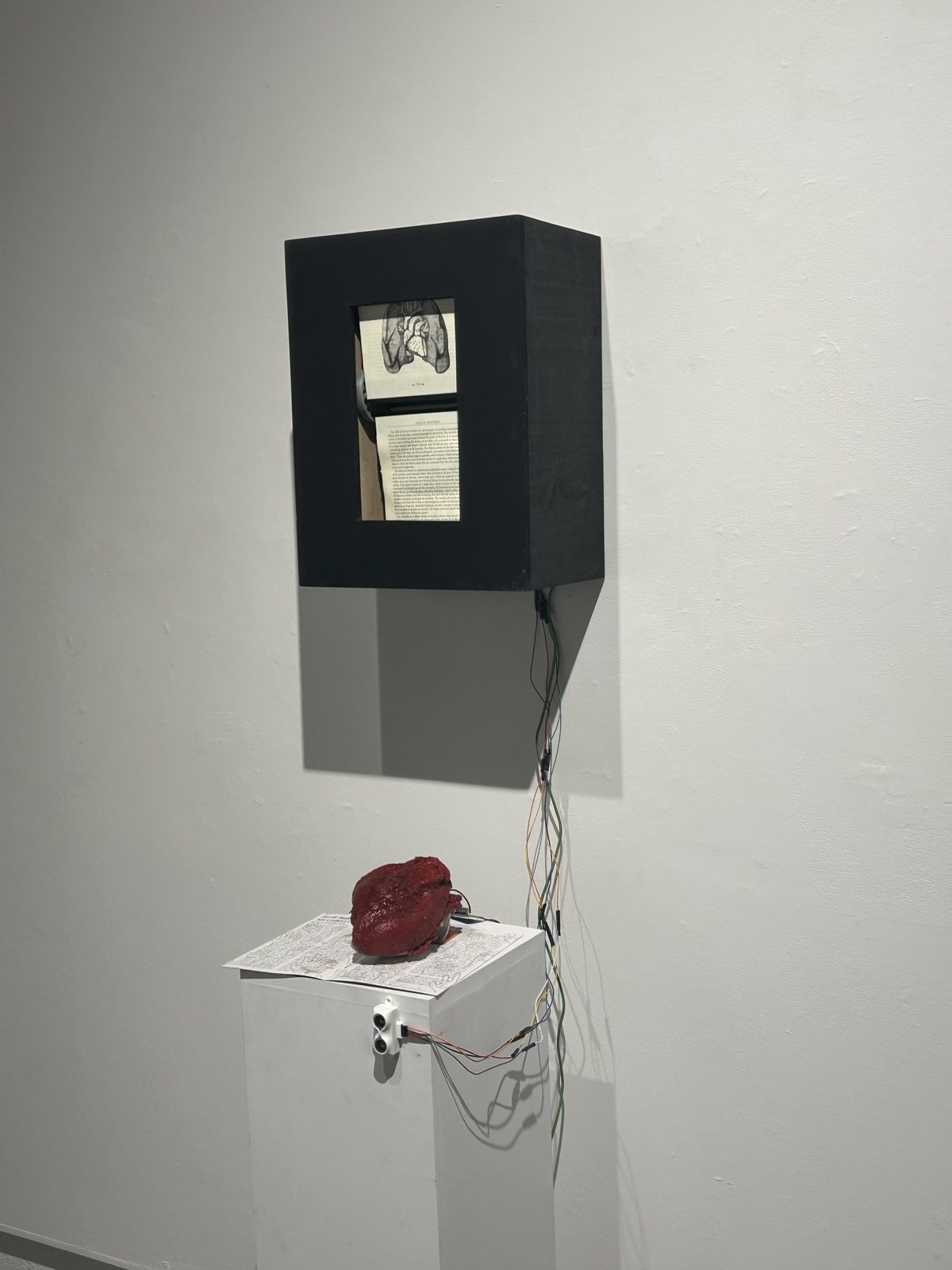
An interactive installation about health anxiety: a silicone heart beats calmly on a pedestal while the anatomy pages above it flip faster and faster the closer you look.
AESTHETIC DESIGN | EMBEDDED SYSTEMS | TEAM PROJECT
Overview
Hypochondriasis was our final piece for SYDE 599: Tech Art Studio at the University of Waterloo, a course where engineers, programmers, and artists build interactive artwork together. We had three weeks to go from an idea to a piece on a gallery wall.
A cast-silicone heart sits in a steel bowl on a white pedestal, beating at a steady, constant rhythm. Above it, black wall-mounted boxes frame pages from Gray's Anatomy. An ultrasonic sensor on the front of the pedestal watches for visitors, and as someone approaches, the pages start flipping faster. The heart never changes pace. Only the reading speeds up, and the closer you look, the more frantic it gets.
The Team
We were a four-person, cross-disciplinary team:
- Matthew Watts (Engineering): electronics, firmware, power, and mechanisms
- Cindy Li (Computer Science)
- Paige Mehring (Fine Arts)
- Inderpreet Singh Badesha (Knowledge Integration)
As the engineer, I turned the concept into hardware that could survive a gallery show. That meant choosing and wiring the components, programming the controllers, getting the heart mechanism working, and integrating everything into the pedestal and boxes. The concept, the casting, the boxes, and the installation were shared across the team.
Specs at a glance
| Heart | Arduino Micro + PCA9685 16-channel servo driver, 3× MG90S servos, constant beat |
| Pages | Arduino Mega 2560 + ULN2003 drivers, 28BYJ-48 stepper motors |
| Sensing | HC-SR04 ultrasonic sensor on the pedestal; closer visitors make the pages flip faster |
| Fabrication | Printed PLA mechanism and shell, cast silicone skin, painted plywood boxes |
Three Weeks, Start to Finish
Week 1: Concept and parts. We settled on the concept as a team and agreed on what had to move, what had to sense, and what had to look real. For the heart, we started from Will Cogley's open-source animatronic Servo Heart (Nilheim Mechatronics). Its three-servo linkage gave us a believable heartbeat quickly, so we could put our time into the rest of the piece. I started printing the mechanism and shell, ordered the electronics, and set every part out on the bench with labels before anything got wired.
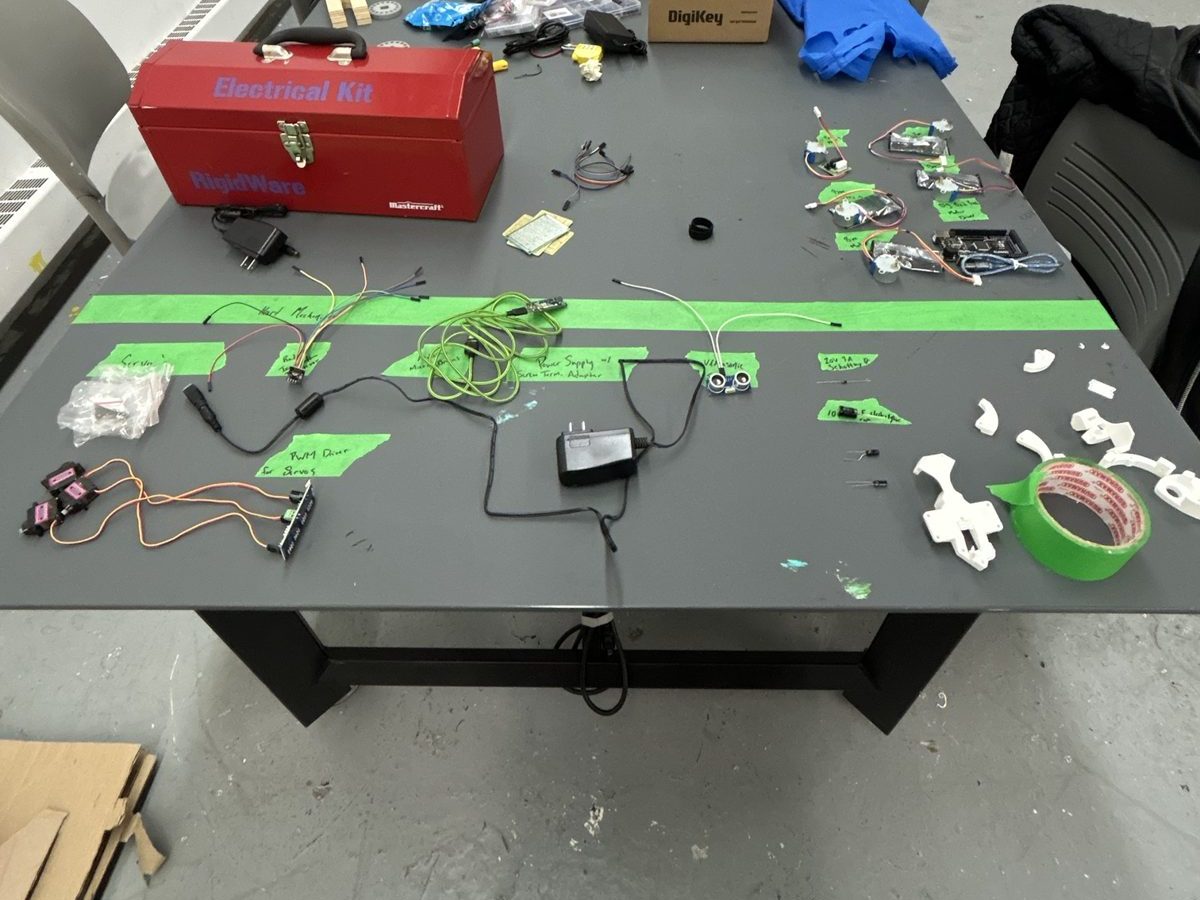
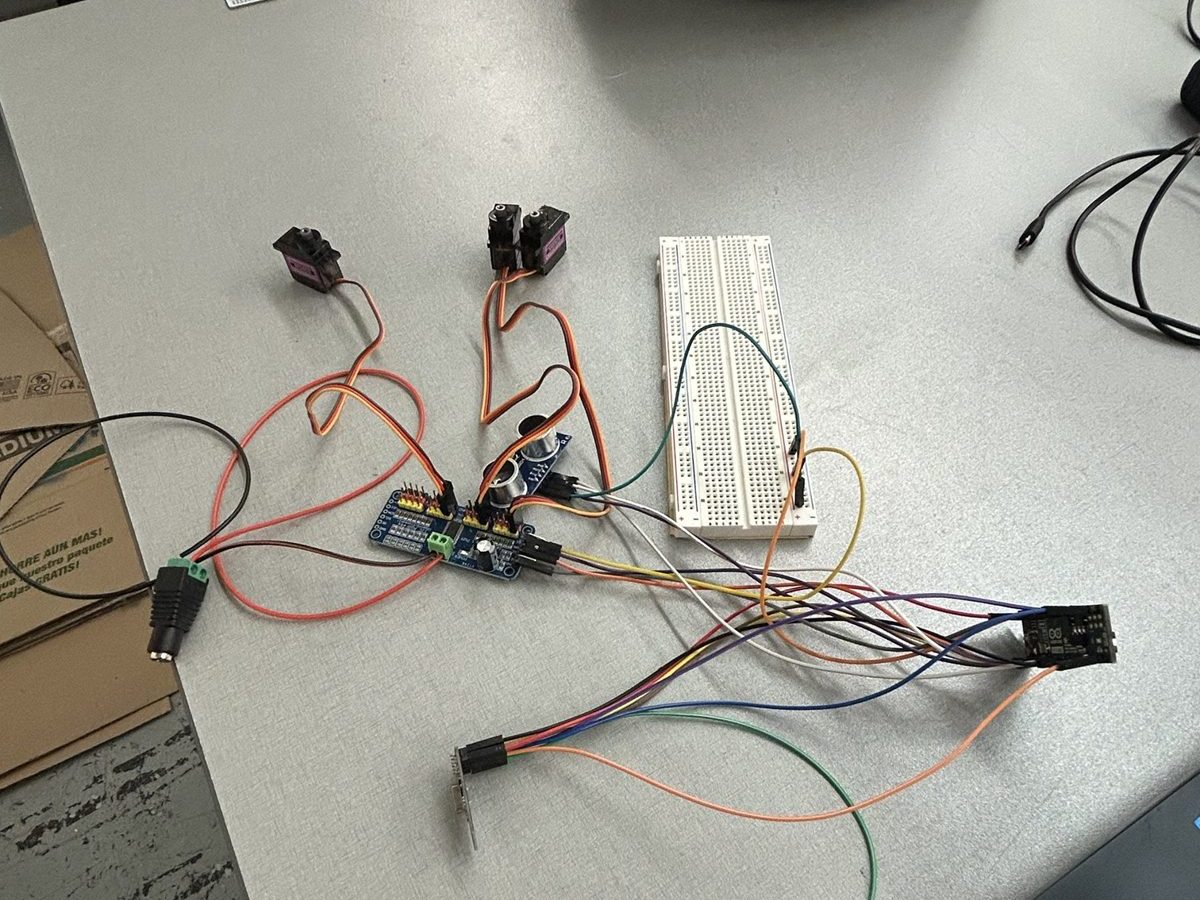
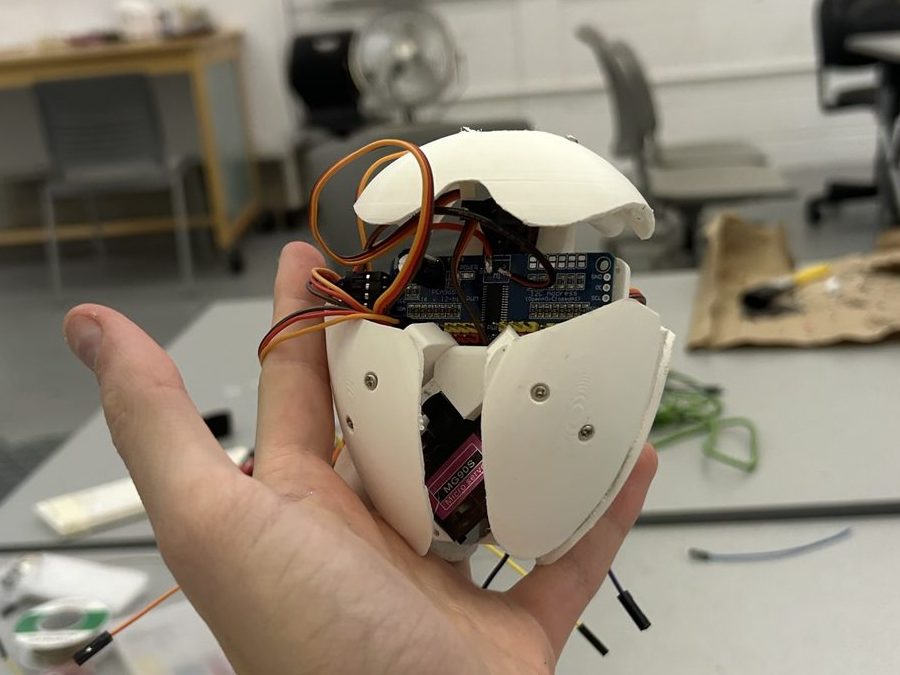
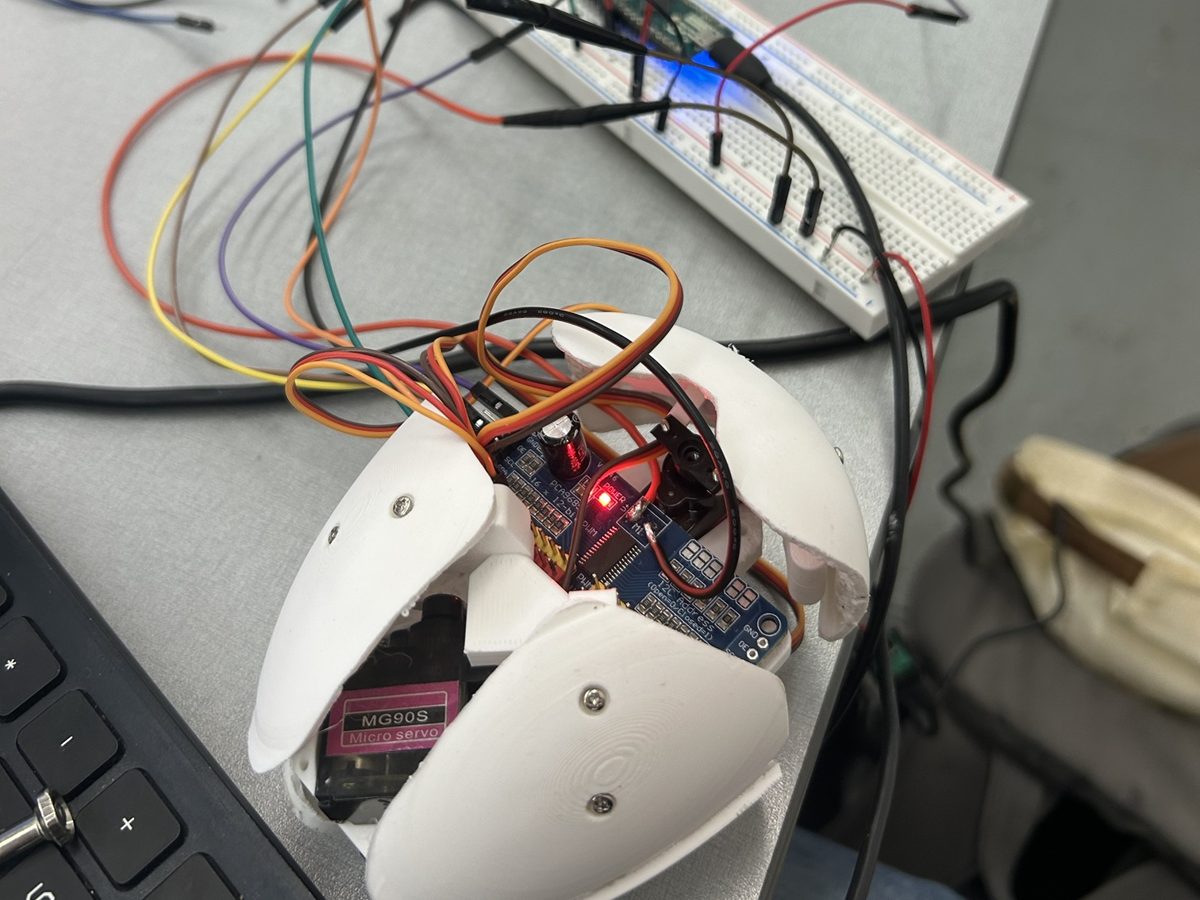
Week 2: Prototyping and fabrication. I brought up the heart electronics on a breadboard (the servo driver and three servos on a shared 5V supply), then mounted everything inside the printed heart. Meanwhile, the team cast the silicone skin and built and painted the boxes.
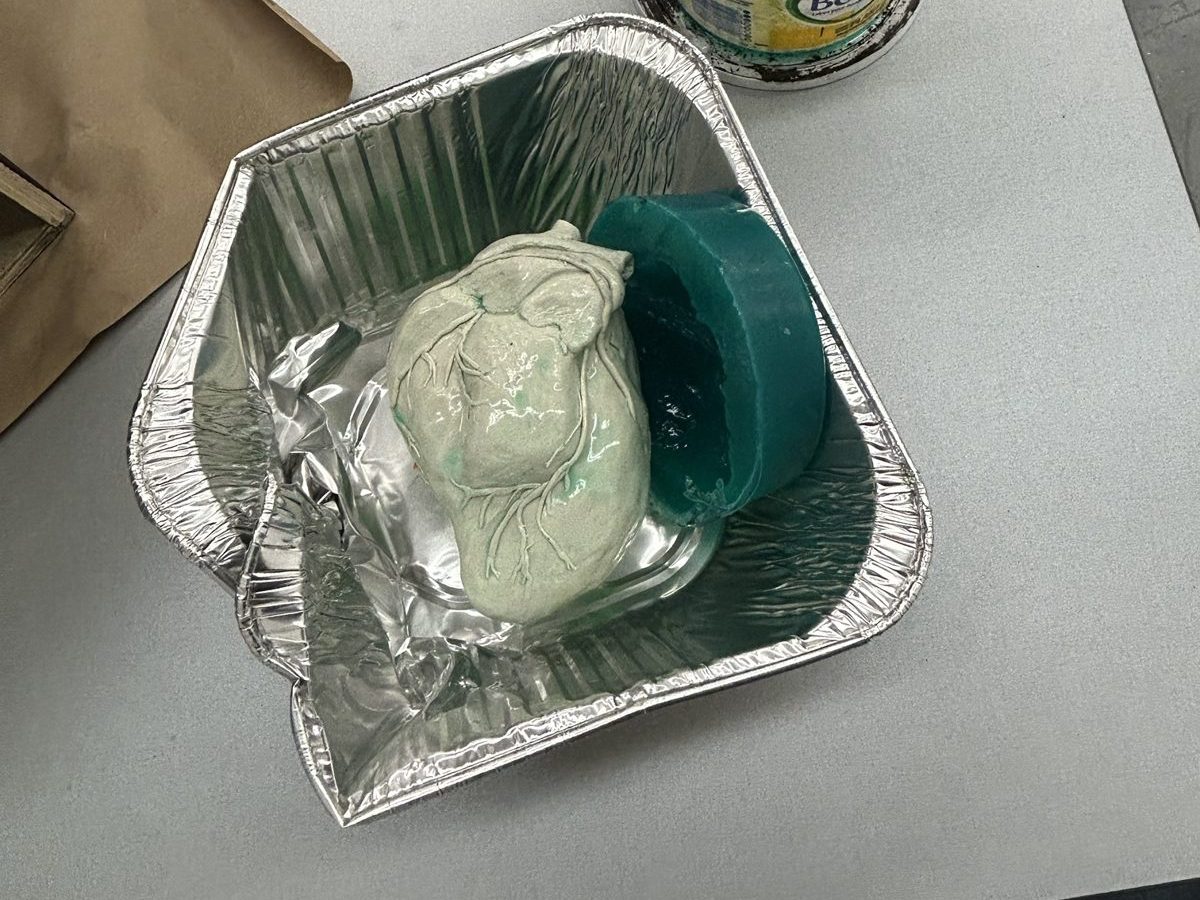
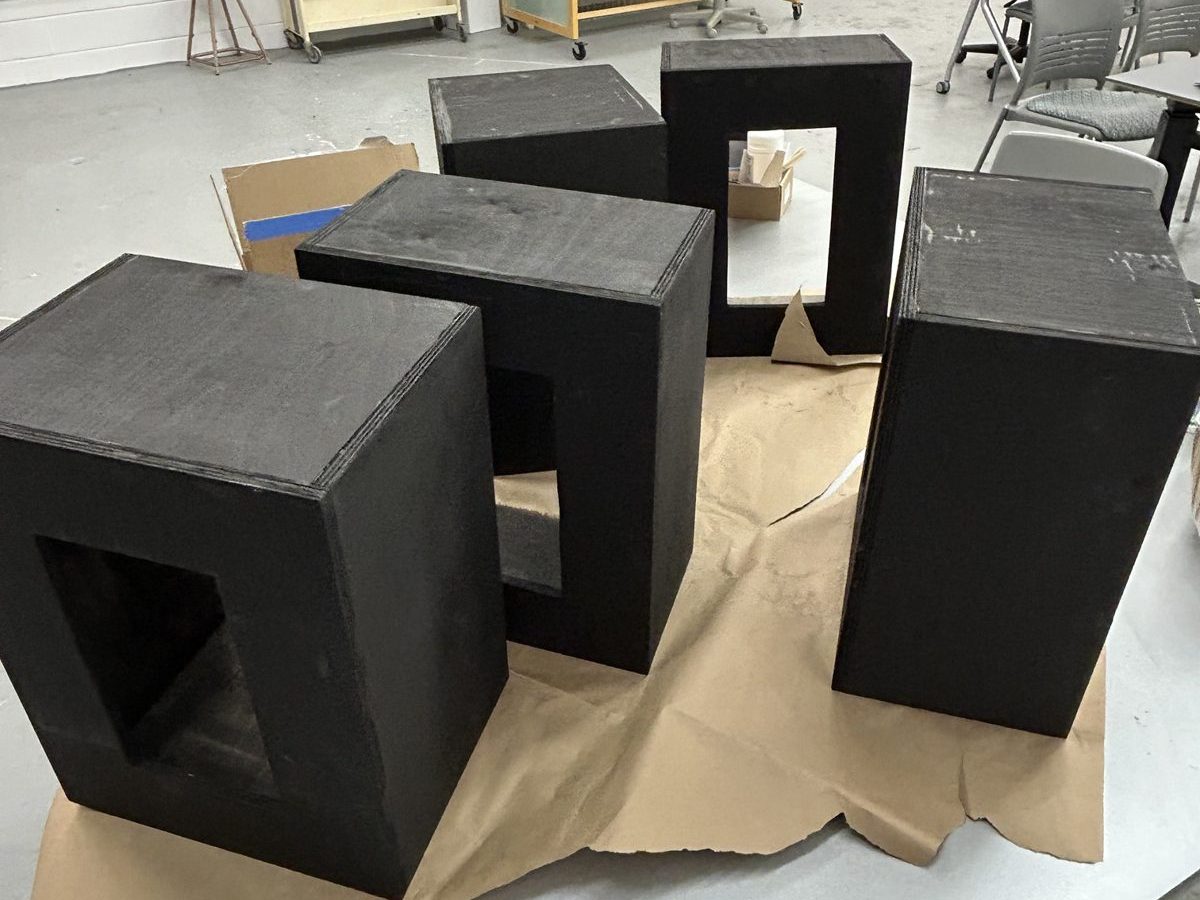
Week 3: Integration and install. The last week was about turning the parts into one installation. We sketched out the layout: where the heart and sensor would sit on the pedestal, how the cables would run, and how one "prime" box would house the Mega and drive the motors. I wired the sensor into the page controller, printed a mount for it, and tested the full system on the bench before it went up on the wall.
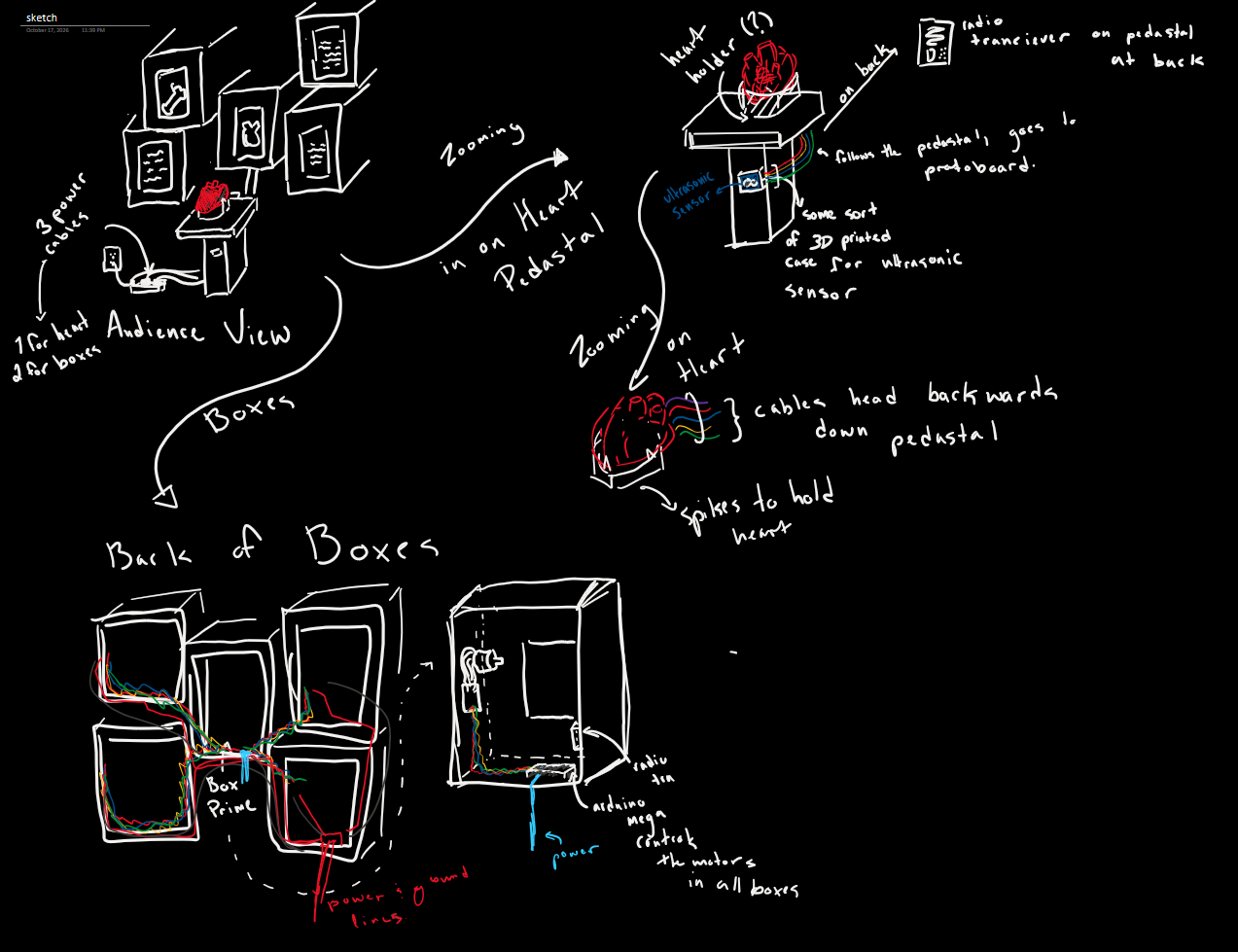
How I Built It
The heart. An Arduino Micro drives three MG90S servos through a PCA9685 servo driver, inside Cogley's printed linkage and shell. The servos push the silicone skin out and let it relax in an offset rhythm, so the chambers squeeze in sequence instead of all at once. The heart runs at one constant rate. Keeping it steady was a deliberate choice: the body stays calm while everything around it spirals.
The pages. Inside the boxes, 28BYJ-48 stepper motors driven through ULN2003 boards turn the Gray's Anatomy pages past each window, all controlled by an Arduino Mega. The HC-SR04 on the pedestal measures how far away the nearest visitor is, and the Mega maps that distance to motor speed: when no one is near, the pages turn slowly, and as someone gets closer, they flip faster and faster.
Challenges I Ran Into
- Three weeks. The schedule set every decision. We started from an open-source heart mechanism instead of designing one, kept the heart and the pages as two independent systems, and built and tested each subsystem on its own so problems surfaced early, not on install day.
- Power. The reference wiring fed 5V into the Micro's VIN pin. VIN goes through an onboard regulator that needs 7V or more, which left the board running under-voltage. I moved the feed to the 5V pin through a 1N5817 Schottky diode, which also lets USB stay plugged in for debugging. A bulk capacitor at the servo driver absorbs the current spikes when all three servos move at once.
- Stepper quirks. The 28BYJ-48s just buzz in place unless their coils are driven in IN1-IN3-IN2-IN4 order. They also top out around 15 RPM at 5V, which capped how fast the pages could flip.
Accomplishments
We went from concept to a finished, exhibited installation in three weeks. The interaction is designed to reward lingering: from across the room it's just a heart and some old anatomy pages, and it only starts to unravel once you step in for a closer look.
What I Learned
Working with a CS student, a Fine Arts student, and a Knowledge Integration student changed how I approach engineering problems. The question was rarely "does it work?" and more often "does it feel right?", and sometimes the right answer was to make something simpler, like letting the heart beat at a constant rate. I also got real practice in power design for mixed loads, and in scoping hard to fit a three-week deadline.
Status / Known Limitations
- Presence sensing is a single ultrasonic sensor, so it reads one direction and the nearest person only.
- The 28BYJ-48 steppers limit how fast the pages can flip.
- The heart beats at one fixed rate and doesn't respond to visitors.